
Drain Field Repair in Fort Myers, FL
Standing water, soggy grass, or slow drains often point to a struggling drain field. We connect you with a licensed local pro who can fix it, often without a full replacement.
What Drain Field Repair Actually Involves
A drain field, also called a leach field, is where effluent from your septic tank gets absorbed and filtered by the soil. When it fails, the cause is usually one of three things: soil saturation from too much water, blocked lateral lines, or root intrusion working its way into the pipes underground.
A failing drain field doesn't automatically mean a full replacement. Depending on the cause, a licensed pro might clear blocked lines, replace a section of damaged pipe, or use a specialized treatment to rejuvenate the soil itself without excavating the whole field. That last option, sometimes marketed as a no-excavation repair, can save significant time and cost when the soil itself is the problem rather than the pipes.
For sites where the ground genuinely can't support a standard field anymore, often due to a high water table, a mound system, a raised bed of approved sand and gravel, can restore the separation the drain field needs from groundwater below.
Signs Your Drain Field Is Failing
Standing water or a soggy patch over the drain field that never dries out
A patch of grass over the drain field that is greener or growing faster than the rest of your yard
Slow drains or gurgling toilets, especially after heavy rain
A sewage smell in the yard, even when nothing seems visibly wrong
The bright green grass sign trips up a lot of homeowners, since a healthier-looking patch of lawn seems like a good thing. In reality, it usually means effluent is surfacing and feeding the grass instead of being absorbed underground the way it should be.
How Drain Field Repair Works
Diagnose the Cause
A licensed pro checks whether the problem is soil saturation, blocked lateral lines, or root intrusion.
Assess the System
A visual inspection and a check of how water is flowing through the field shows exactly where the problem is.
Repair, Not Always Replace
Depending on the cause, the fix might be clearing blocked lines, replacing damaged pipe, or restoring the soil itself without digging up the whole field.
For Failed Sites, a Mound System
If the ground can't support a standard field, a raised mound system can create the separation needed from a high water table.
Why Drain Fields Struggle Here
Fort Myers has a shallow water table and sandy soil across most of the area. That soil drains fast most of the time, but it also means drain fields have less room to work with once the ground gets saturated.
Heavy rain, especially during hurricane season from June through November, is when most drain field problems show up. The ground simply cannot absorb effluent as fast as it normally would.
A drain field already working hard against a high water table has even less margin when the tank feeding it is overdue for pumping. Staying current on pumping is one of the cheapest ways to protect a field that's already under more strain than one in denser, drier soil.
A failing drain field does not always mean a full replacement. In a lot of cases, the field itself can be repaired or restored, which costs less and takes less time than starting over.
What Drain Field Repair Typically Costs
A minor repair, like fixing a distribution box or replacing a single damaged section of pipe, typically runs $500 to $2,500. Drain field rejuvenation, the no-excavation soil treatment used when the field itself has lost absorption capacity rather than the pipes being damaged, generally runs $1,000 to $5,000. A moderate repair addressing a more localized failure typically falls in the $1,500 to $5,500 range, with South Florida properties often trending toward the higher end given soil and water table conditions here.
If your drain field needs full replacement or a mound system, costs run significantly higher — see our Drain Field Replacement / Mound Systems page for that pricing.
These are typical ranges, not a quote. Your actual cost depends on what's actually causing the failure and how far it's progressed.
Example Job — North Fort Myers
The Problem
A homeowner in North Fort Myers noticed standing water and an unusually green patch of grass over their drain field after several weeks of heavy hurricane-season rain, along with drains that ran slower than usual whenever it rained.
The Diagnosis
An assessment found no blocked lateral lines and no root intrusion — the cause was soil saturation. The already-high local water table, pushed up further by weeks of rain, had reduced the soil's ability to absorb effluent the way it normally would. The pipes and field structure themselves were sound.
The Fix
Rather than excavating the field, the connected contractor used a no-excavation soil rejuvenation treatment to restore the soil's absorption capacity, addressing the actual cause rather than digging up a field that wasn't structurally damaged.
Recurrence Prevention
The homeowner was advised to stay current on tank pumping going forward, since a field already working against seasonal saturation has less margin to spare if the tank is also overdue. Monitoring the same area during future storm seasons was recommended as a simple way to catch any recurrence early.
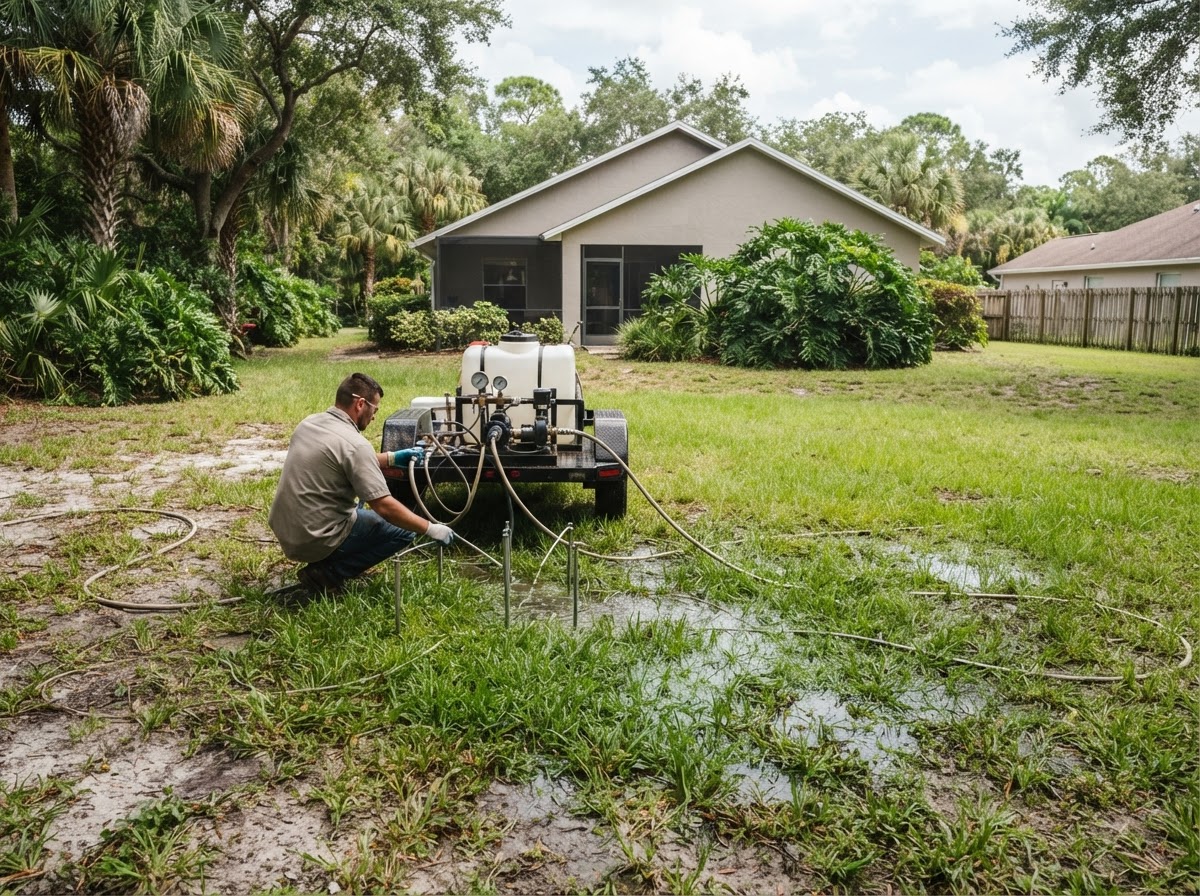
Soil rejuvenation treatment restoring drain field absorption after storm-season saturation
| Item | Cost |
|---|---|
| Diagnostic assessment | $150–$400 |
| Soil rejuvenation treatment (no-excavation) | $1,000–$5,000 |
| Total | $1,150–$5,400 |
Costs vary by cause, severity, and site conditions — this reflects a typical saturation-related rejuvenation scenario and is not a quote. A free estimate from your connected professional will confirm exact pricing for your property.
Why Homeowners Work With Us on This
We Diagnose Before We Recommend
You get a real answer on what is actually wrong before anyone talks about a fix.
Licensed and Verifiable
Every pro in our network is licensed for septic work in Florida. You can check any contractor at myfloridalicense.com before work starts.
Repair First, Replace Only If Needed
We connect you with pros who look at repair options before jumping to full replacement.
We Know Fort Myers Soil
Sandy soil and a high water table are not new to us. We know what actually causes drain field failure here.
Areas We Serve
Fort Myers, Cape Coral, North Fort Myers, Iona, San Carlos Park, Buckingham